
The enlarged chest (breast) tissue in males is referred to as “gynecomastia.” The excessive growth of glandular tissue causes the breast volume to increase, which is, however, non-malignant. Gynecomastia is caused by an imbalance in the hormones testosterone & estrogen. It can impact one or both breasts, even asymmetrically sometimes. The breast size can also be increased due to obesity, as it leads to excessive growth of adipose (fat) tissue. This is also referred to as “Pseudogynaecomastia.”
All the males can be affected by gynecomastia, irrespective of their age. But the phases during which gynecomastia occurs are the puberty phase, and older adulthood. It impacts over 50% of the males at some point in their lives, making it a significantly commonly occurring concern among males.
How Does Gynocomastia Look and Feel Like?
Gynecomastia looks like a pea-sized growth right beneath the areola (nipple). It can also appear and feel like a breast lump when you put pressure on the area. The lump is tender and soft to touch and can move smoothly within the breast tissue. Either one or both of the breasts can have this lump and enlargement. ]
If you have developed enlarged breasts due to excess adipose tissue, it looks like a general increase in breast size and not a lump.
A lump in the breast tissue can also form because of male breast cancer, which is however a rarity. It’s essential to get a thorough evaluation done by a qualified plastic surgeon to diagnose the accurate cause of the lump.
How Common Is Gynecomastia?
- Globally, gynecomastia impacts approximately 35% to 65% of adult men and roughly 50% to 70% of pubescent boys at some point in their lives
- Clinical studies suggest that approximately 1 in 8 men in India experience some degree of gynecomastia at some point in their lives.
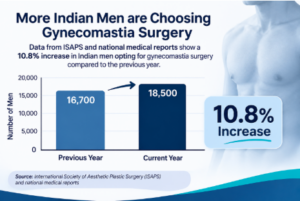
- Data from the International Society of Aesthetic Plastic Surgery (ISAPS) and national medical reports show there has been a 10.8% increase over the previous year in Indian men who opted for gynecomastia surgery
What Causes Gynecomastia?
Enlargement of glandular tissue in the male breasts causes gynecomastia. A spike in estrogen levels is the reason why granular tissue in the male breasts grows. The synthesis of testosterone is also impacted by increased levels of estrogen.
Although the cause is natural and not detrimental in most cases, it could also be a sign of certain underlying medical conditions, which require medical attention.
Health Conditions That Can Cause Gynecomastia
The growth in glandular tissue could possibly be the sign of the result of these conditions:
- Overactive thyroid.
- Liver disease and cirrhosis.
- Low testosterone levels
- Pituitary gland tumors.
- Testicular tumors.
- Adrenal tumors.
- Kidney dysfunction
Why Understanding the Difference Between Gynecomastia and Chest Fat Matters
Chest fat and gynecomastia appear identical from the front, but their causes and management differ. And this is why, for effective treatment, accurate diagnosis by a qualified plastic surgeon becomes important.
A thorough evaluation is needed to diagnose:
- Presence of glandular tissue
- Fat distribution
- Skin quality and elasticity
- Degree of enlargement
- Associated medical factors
When Should You Consider a Medical Check-Up a Must?
You must seek medical attention if the chest enlargement is:
- Persistent over time
- Increasing in size
- Associated with tenderness or discomfort
- Uneven or asymmetrical
- Affecting confidence, clothing choices, or daily comfort
To have an accurate diagnosis and the right treatment, timely medical intervention is immensely helpful.
When Is Surgery Considered Necessary?
Multiple factors as listed below determine the necessity for surgical intervention.
- Age
- Overall health status
- Duration of symptoms
- Underlying causes
- Extent of gland enlargement
- Presence of excess fat or loose skin
The Overlooked Perspective Of Emotional Impact
Many individuals refrain from wearing fitted clothing, swimming, sports, or social situations due to discomfort with appearance. For some, self-image is sabotaged, confidence is lowered, and quality of life is hindered. An unhealthy relationship with the body is developed, leading to more insecurities and an inferiority complex.
Also Read : Myths & Facts about Gynecomastia Surgery
Conclusion
Gynecomastia is widely prevalent & treatable. Persistent chest enlargement in men just does not pertain to weight gain and should not be self-diagnosed.
A detailed assessment by a qualified Plastic Surgeon can help you determine the exact underlying cause, set realistic expectations for the results of the procedure, and discuss the right treatment options based on individual anatomy.
Please remember that right treatment begins with the right diagnosis. If you are considering gynecomastia surgery, schedule a detailed consultation with Dr Preeti Pandya at the Viva Esthetique clinic in Delhi and take the first step toward a confident, natural-looking result.