
Rhinoplasty surgery, also famously referred to as a “nose job”, is a surgical procedure that has been designed to reshape, resize, or reconstruct the bone and cartilage of the nose for aesthetic purposes or to restore nasal function, address breathing difficulties, sinus troubles, or repair any nasal damage due to injury or a birth condition.
Rhinoplasty surgery can help boost an individual’s self-esteem and also significantly enhance quality of life through better breathing and nasal functioning.
What Are The Reasons To Get Rhinoplasty Surgery?
Following are the reasons why you can consider getting a rhinoplasty procedure done:
- Correcting a birth defect
- Open blocked nasal passage
- Repair a facial fracture
- Restore breathing function after disease, cancer treatments, traumatic injuries, or burns.
- Enhance overall appearance.
How to Know If You Are an Ideal Candidate for Rhinoplasty Surgery?
You are an ideal candidate for a rhinoplasty surgery if you:
- Are in good physical health
- Do not smoke
- Have set realistic goals and expectations from the results.
- Understand the limitations of the procedure
What Are The Distinct Types Of Rhinoplasty Procedures Available?
There are five types of rhinoplasty surgery approaches, which are
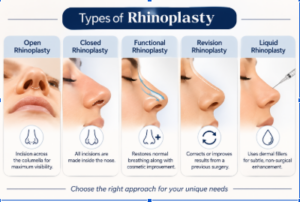
1. Open Rhinoplasty: The plastic surgeon makes a small, discreet external incision on the strip of skin between the nostrils in addition to internal incisions. to lift the skin in a way that the bone and cartilage below can be seen directly. It is selected for complex structural reconstruction, repair of severe trauma or revision surgeries.
2. Closed Rhinoplasty: There are no external incisions or visible scars; the incisions are made inside the nostrils. Typically smaller, more local refinements are the cases where closed rhinoplasty is chosen.
3. Functional Rhinoplasty: It is also referred to as reconstructive rhinoplasty. The procedure aims to restore or improve nasal airflow and breathing.
4. Liquid Rhinoplasty: A non-invasive cosmetic procedure that uses dermal fillers, most often hyaluronic acid, to temporarily modify the shape of the nose.
5. Revision Rhinoplasty: This is also known as secondary rhinoplasty and is performed to correct problems that have occurred after a previously done surgery. It is more complex and involves cartilage grafts (taken from the septum, ear, or rib).
How common is rhinoplasty?
According to the International Society of Aesthetic Plastic Surgery (ISAPS) Global Survey, rhinoplasty recorded approximately 1 million procedures globally, making it one of the top five surgical aesthetic procedures worldwide.
India ranks 2nd worldwide in rhinoplasty surgeries. The Indian rhinoplasty market is projected to reach US$ 236.2 million by 2030, growing at a compound annual growth rate (CAGR) of 9.7% from 2023.
Steps To Be Taken Prior To A Rhinoplasty Procedure?
You will have an initial meeting with the plastic surgeon before the rhinoplasty treatment begins. You ought to ask questions and outline the outcomes you expect to achieve during this discussion. The plastic surgeon will assess your face thoroughly. You can talk about the risks, results, and options for surgery.
You should bring along:
- A list of all the current drugs and supplements, together with their dosages.
- Pictures of your desired post-operative nose appearance, if you have any.
What Happens During A Rhinoplasty Surgery?
For a rhinoplasty surgery, you can return home the same day, or you might be recommended an overnight stay, depending upon the type of procedure.
In the course of your rhinoplasty:
- Anesthesia is administered by the anesthetist.
- During a closed rhinoplasty, the plastic surgeon creates an incision inside your nostrils. For an open rhinoplasty, an incision is made across the base of the nose.
- Raises the skin that covers the cartilage and bones in your nose.
- Creates a new shape or corrects a deviated septum by reducing, adding, or rearranging the underlying bone and cartilage.
- Replaces the skin that covers the cartilage nasal bones.
- uses tiny stitches to hold your skin in place.
Please note that, for a rhinoplasty procedure, it may take up to 2 to 3 hours.
What Happens Following A Rhinoplasty Surgery?
Following a rhinoplasty procedure, you will be:
- Given a splint to wear to reduce swelling and preserve the new shape of your nose during the healing process. The splint will be worn for a week or two.
- Given a cotton gauze (packing) to be put inside your nose. Within 24 to 48 hours following surgery, you can remove the packing as directed by your surgeon.
The Recovery Timeline
For most individuals, 2–4 weeks is the recovery period, though final results may take some months to be fully evident. Swelling decreases gradually, and routine activities can be resumed in about a week’s period. Following post-surgery instructions recommended by the plastic surgeon ensures a safe and smooth recovery.
The Precautions To Be Taken:
- Sleep with your head elevated
- Avoid wearing glasses for 2–3 weeks
- Skip heavy exercise for 4 weeks
- Apply a cold compress for swelling
- Follow the medications prescribed by the Plastic Surgeon
- Take the follow-up appointment
Healing Timeline:
- Noticeable swelling: Day 1–3
- Splint removal: Week 1:
- Evident improvement: Week 2–3:
- Settled final results: 3-6 months
What Are The Advantages Of Rhinoplasty Surgery?
The benefits of having a rhinoplasty surgery include:
- Improved nasal functioning
- Enhanced self-esteem
- Better quality of life.
Also Read: The Complete Guide to Mommy Makeover In Delhi
Conclusion
If you are bothered about how your nose looks or you are having difficulty in breathing, you should talk to a qualified plastic surgeon to discuss whether you’re a good candidate for rhinoplasty. The procedure can definitely enhance your appearance and improve your nasal functioning, provided you set realistic expectations about your results.
If you are considering a rhinoplasty surgery, schedule a detailed consultation with Dr Preeti Pandya at the Viva Esthetique clinic in Delhi and take the first step toward a confident, natural-looking result.